
Tribano artifacts
Cataloguing of ceramic artifacts of Venetian production found in the Adige River between the 13th and the 18th centuries.
Display case 1
First floor. Period XIII – XIV
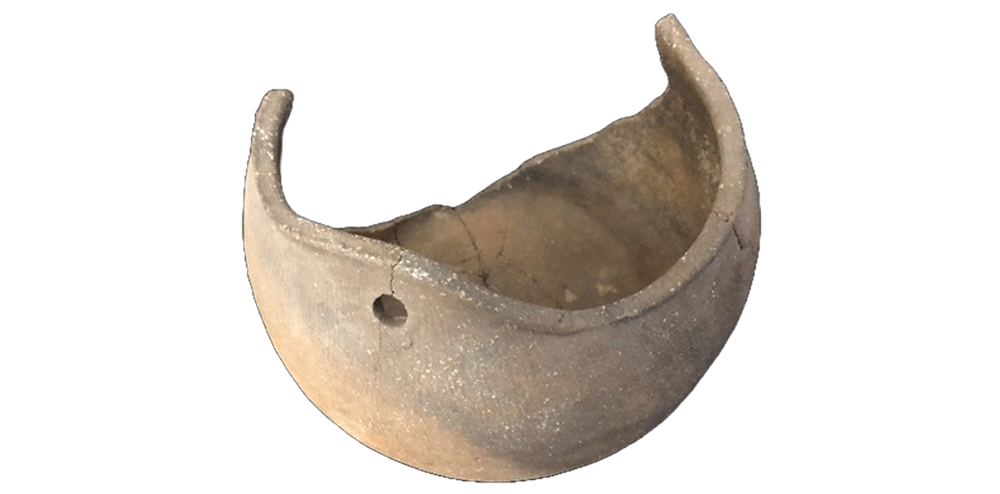
Bucket
The bucket is made of unglazed, coarse-textured terracotta. It has a maximum height of twenty-two centimeters, a rim diameter of twenty-one centimeters, and a base diameter of twenty centimeters. The shape is ovoid with a flat bottom, a thickened rim, and a rounded perforated handle. The clay is brown with limestone inclusions. The object is incomplete. The exterior of the body is decorated with parallel horizontal ribbing extending to the base. The handle features vertical symmetrical incised marks. It dates back to the thirteenth, fourteenth centuries and likely originates from the Adige River.
Display case 2
First floor. Period XIV – XV
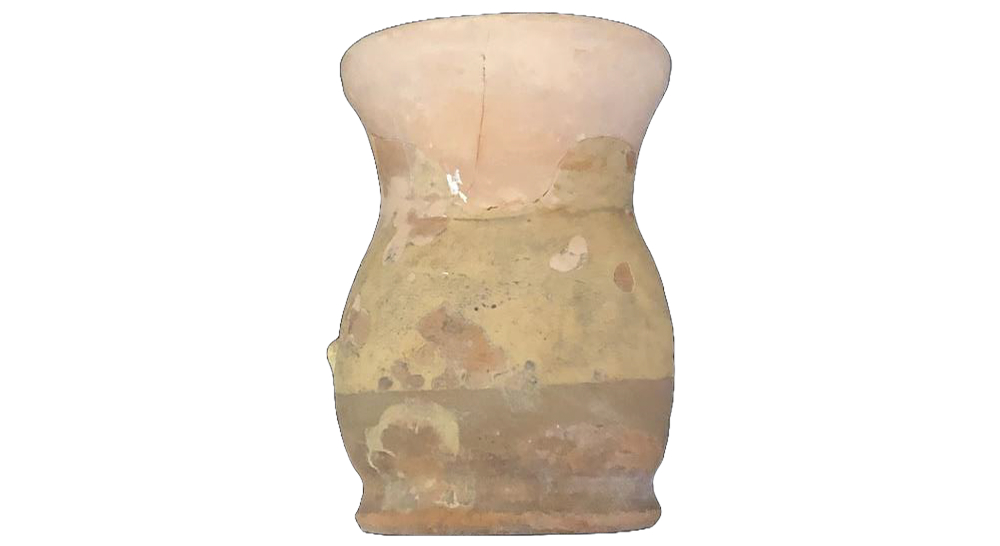
Beaker
The beaker is made of slip-coated and glazed terracotta. It stands thirteen centimeters high, with a mouth diameter of approximately nine centimeters and a base diameter of eight centimeters. It has a cylindrical shape that tapers at two-thirds of its height. The base is flat, and the handle is missing. The slip is uncolored. The clay is red. The rim has been restored. It dates back to the fourteenth, fifteenth centuries and originates from the Adige River.
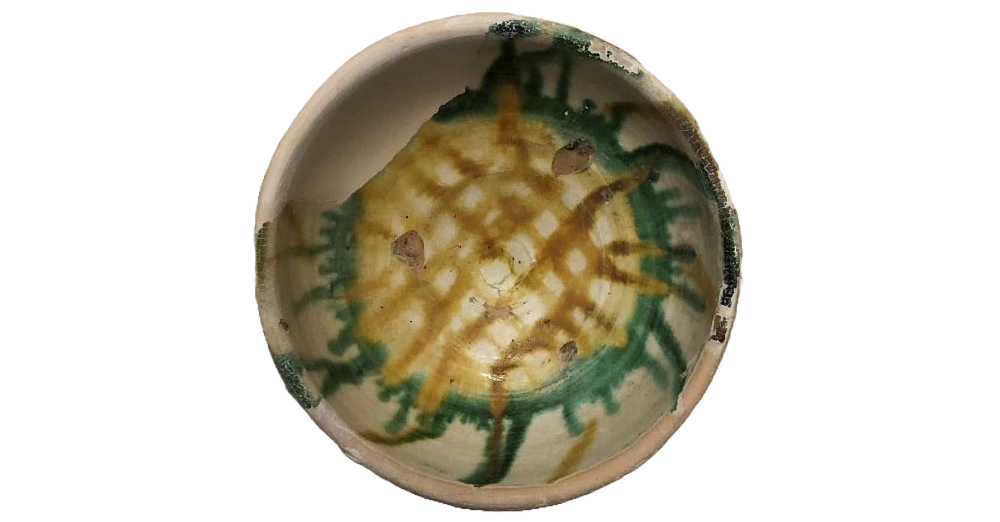
Bowl
The bowl is made of slip-coated, painted, and glazed terracotta. It stands five point five centimeters high, with a rim diameter of thirteen point five centimeters and a base diameter of six point five centimeters. The shape is hemispherical with a concave base. The interior decoration depicts a pomegranate motif. The colors used are copper green and iron yellow, with visible runs, drips. The exterior is glazed down to the base. The clay is pink. There is a minor restoration. It dates to the fifteenth century and originates from the Adige River.
Display case 3
First floor. Period XIV – XV
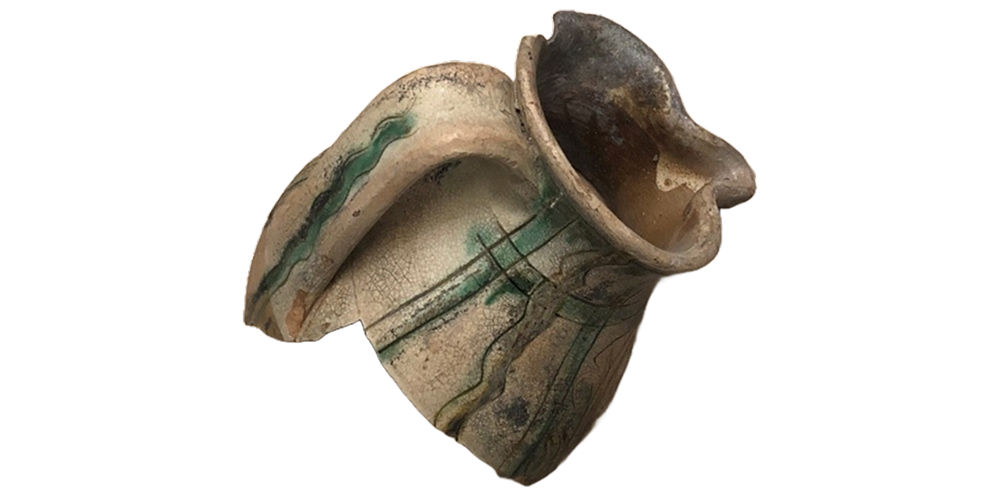
Jug
The jug is made of slip-coated, scrafito-decorated, painted, and glazed terracotta. It has a mouth diameter of eleven centimeters and a maximum height of sixteen centimeters. The shape is piriform, pear-shaped, with a trefoil, three-lobed mouth, and a ribbon handle. The object is incomplete. The decoration includes straight and wavy vertical bands, a floral motif on the body, belly, and a sectional band around the neck, featuring cross-hatched lozenge shapes on the front. The colors used are copper green and iron yellow. The clay is red. It dates back to the fourteenth, fifteenth centuries and originates from the Adige River.
Display case 4
Second floor. Period XV – XVI

Bowl
This artifact is a bowl made of red clay, characterized by slip-coated, sgraffito, painted, and glazed ceramic workmanship. The object has a height of six centimeters, a rim diameter of thirteen centimeters, and a concave foot diameter of six centimeters.
From a technical point of view, the bowl is slip-coated and glazed on the exterior surface as well, for approximately two thirds of its height. The decoration is defined by a three-lobed knot motif, alternating with a leaf motif, with the presence of a thin line placed just below the rim. The chromatic palette relies on copper green and iron yellow tones.
The piece, which is currently restored, belongs to Venetian production of the fifteenth or sixteenth century and was recovered from the Adige River.
Display case 5
Second floor. Period XVI
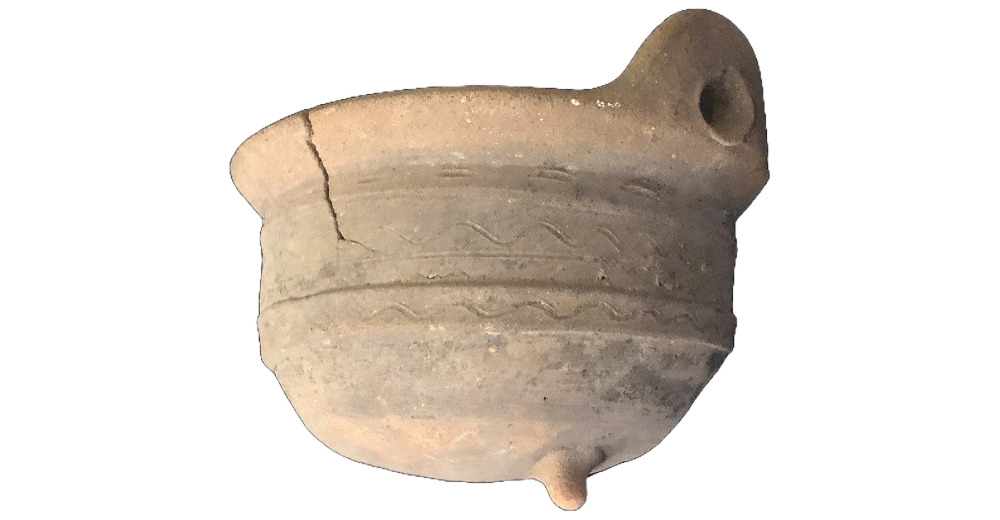
Cooking pot
The cooking pot is made of unglazed, coarse-textured terracotta. It measures fifteen centimeters in height, with a rim diameter of twenty-three centimeters, and a maximum width of seventeen point five centimeters. The shape results from the junction between the cylindrical central body and the rounded bowl-shaped base, which features three conical tripod feet. A raised band separates the two sections. The rim flares outwards to create a seating for a lid. The handle is rounded, perforated, and raised. The clay is brown with sandy inclusions. There are visible traces of fire blackening. The object is incomplete. The external decoration consists of hatching below the rim and a band of sinusoidal wavy ribbing between a slight protrusion and the raised band, which is also decorated with a sinusoidal groove. It dates to the sixteenth century and originates from the Adige River.
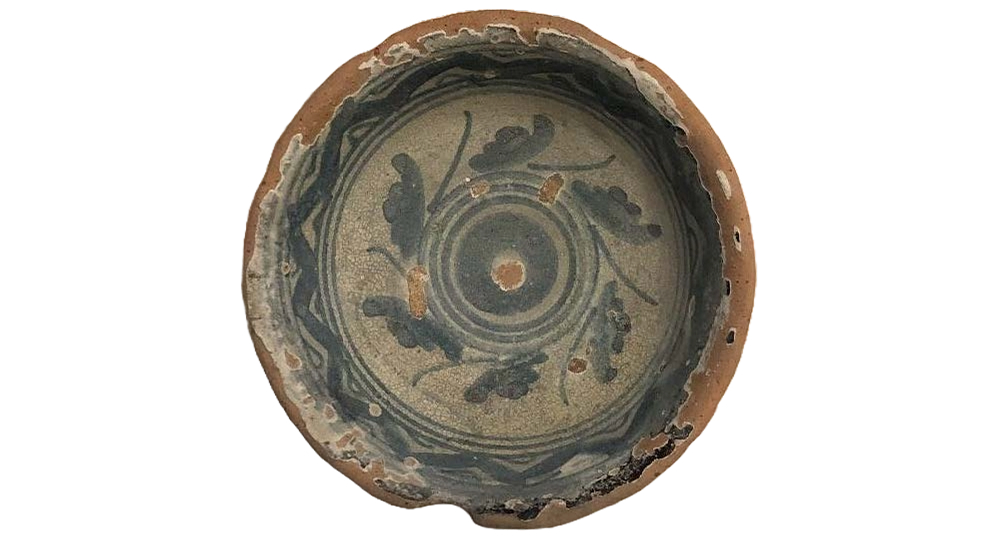
Bowl
The bowl is made of slip-coated and underglaze-painted terracotta. It stands six centimeters high, with a rim diameter of fourteen centimeters and a base diameter of six centimeters. The central motif consists of concentric circles, followed by stylized leaves interspersed with small sprigs. A series of concentric circles delimits a meander band that decorates the wall up to the rim. The color is cobalt blue on a whitish background. The clay is red. The object is intact except for some flaking. It dates to the sixteenth century and originates from the Adide River.
Display case 6
Second floor. Period XVI – XVII – XVIII
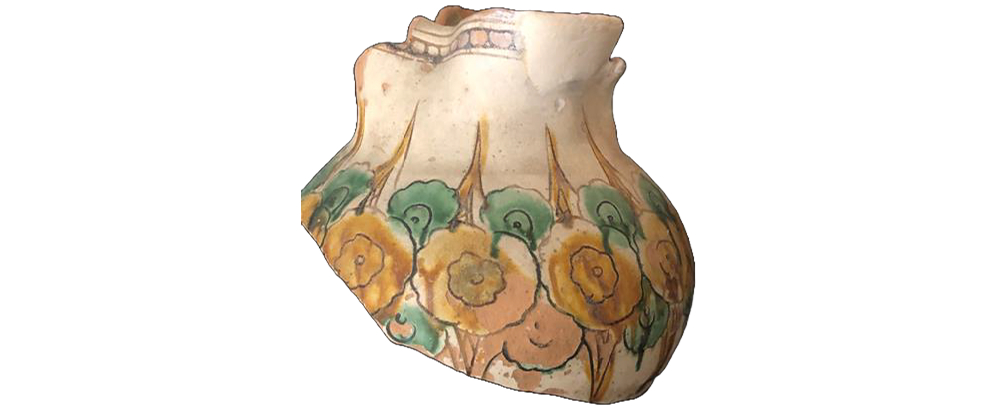
Jug
The jug is made of slip-coated, sgraffito-decorated, painted, and glazed terracotta. It has a mouth diameter of eleven point five centimeters and a maximum height of sixteen centimeters. The shape is spheroidal, with a trefoil, three-lobed mouth, and a missing ribbon handle. The object is incomplete. The decoration consists of a floral-type garland along the central diameter and a band of parallel lines with an infill motif near the rim. The colors used are copper green, iron yellow, and manganese purple. The clay is red. It dates to the sixteenth century and originates from the Adige River.
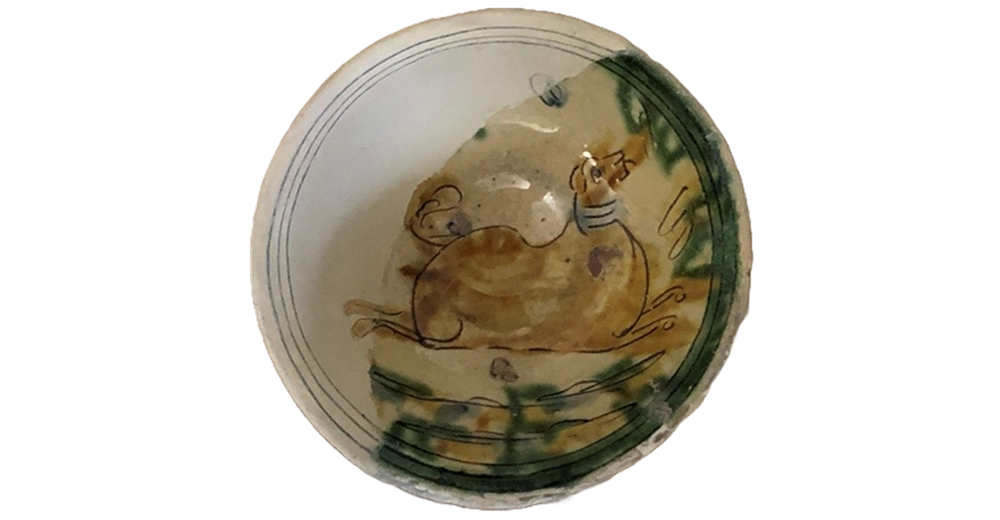
Bowl
The bowl is made of slip-coated, sgraffito-decorated, painted, and glazed terracotta. It stands six point five centimeters high, with a rim diameter of fourteen point five centimeters and a base diameter of five point five centimeters. The shape is hemispherical with a concave base. Depicted in the center is a dog running towards the right, surrounded by stylized leaves and scrolls within three concentric lines that border the rim. The colors used are copper green, iron yellow, and cobalt blue. The clay is red. The form has been restored, integrated. It dates back to the sixteenth, seventeenth centuries and originates from the Adige River.

Firing Spacer Tripod (or “Rooster’s Foot”)
This is a triangular-shaped firing spacer, characterized by three raised points at each vertex. Its purpose was to separate ceramics, such as plates or bowls, stacked inside the kiln, preventing them from sticking together due to the melting of the glaze during firing.
On the surface, there is a letter I incised while the clay was still unfired, probably a mark identifying the workshop.
The object is made of terracotta, a material that gives it both durability and resistance to the heat of the kiln. It has a width of four point five centimeters and a thickness of zero point eight centimeters, and it is attributable to Venetian production between the sixteenth and eighteenth centuries.
Display case 7
Third floor. Period XVII
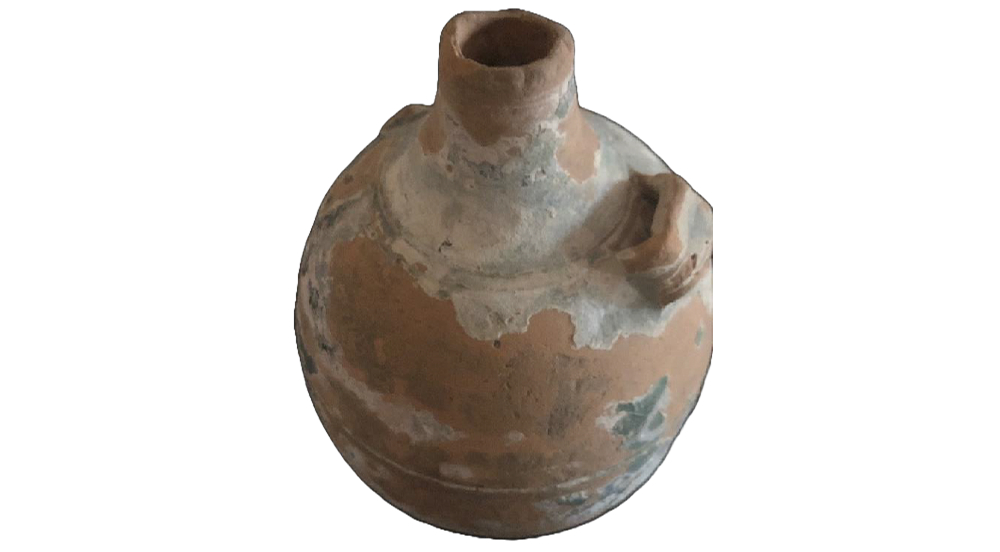
Flask
The flask is made of slip-coated, painted, and glazed terracotta. It stands fifteen centimeters high, with a maximum width of twelve point five centimeters and a base diameter of eight centimeters. It is an oval-shaped, called pilgrim flask, with a flat base that shows wire-cut marks from detachment. The upper rim is abraded, and one of the two handles is missing. The surface is heavily flaked, but traces of cobalt blue brushstrokes are visible. The clay is red. It dates to the seventeenth century and originates from the Adige River.
Display case 8
Third floor. Period XVII – XVIII
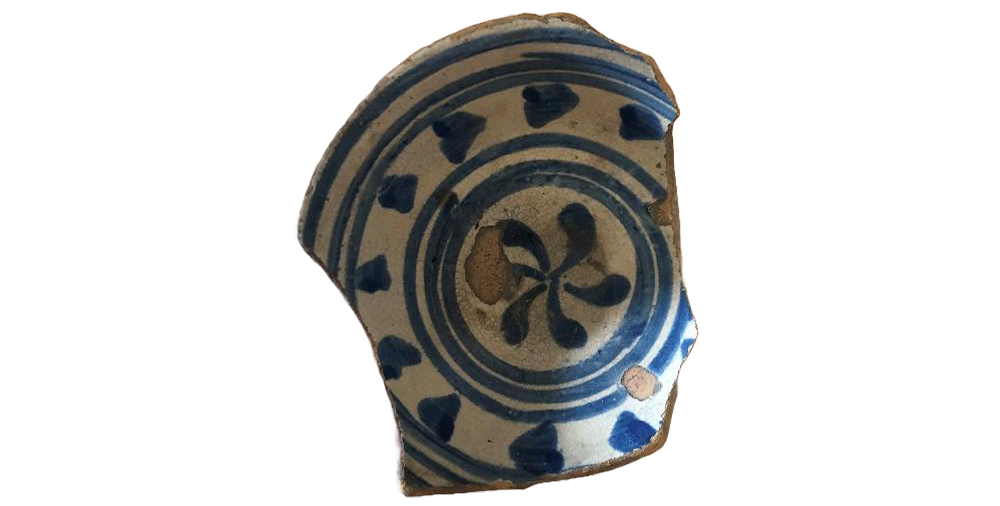
Bowl
The bowl is made of slip-coated and underglaze-painted terracotta. It stands four point eight centimeters high, with a rim diameter of approximately twelve centimeters and a base diameter of five centimeters. The shape is hemispherical. At the center is a stylized multi-petaled pinwheel flower, followed by three concentric circles, a band of equidistant brushstrokes, and another three concentric circles extending to the rim. The colors are cobalt blue on a milky white background. The external slip coating extends down to the base. It dates back to the seventeenth, eighteenth centuries and originates from the Adige River.
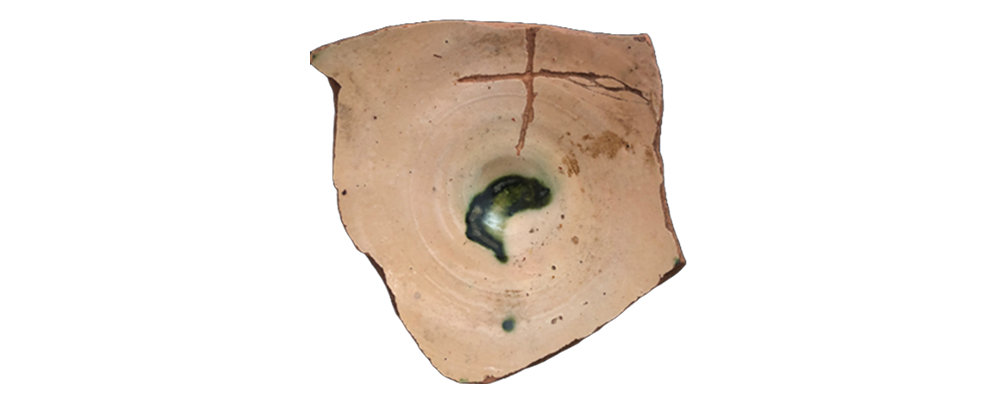
Plate
The artifact is the base of a large plate made of slip-coated ceramic, painted under glaze, with a ring foot. The maximum dimension is 13 centimeters, while the diameter of the foot measures 7 centimeters. The surface is decorated at the center with a green brushstroke, applied on the light background of the glazed slip. After firing, the plate was incised with a deep mark, depicting a cross, to which a probable apotropaic meaning is attributed. The object is made of hazelnut-colored clay and is attributable to Venetian production of the seventeenth century. It is preserved as a fragment and was recovered from the Adige River.
Display case 9
Third floor. Period XVIII
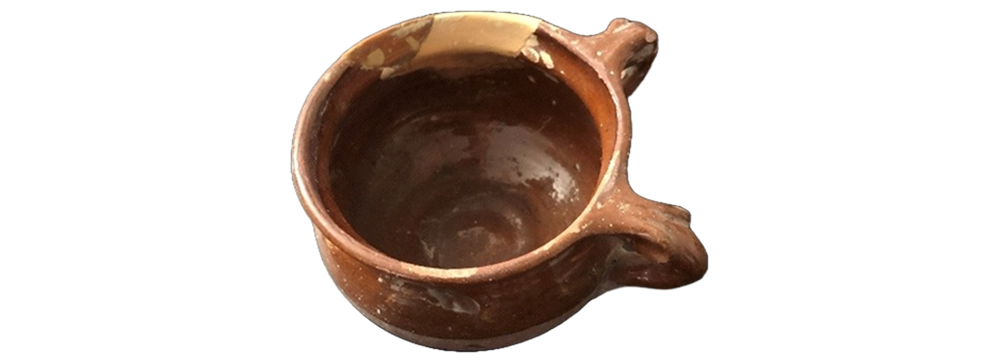
Jar
The jar is eight point five nine centimeters high, with a rim diameter of eleven centimeters and a base diameter of six point five centimeters. It is a small twin handled jar with a spheroidal body, an everted rim, and a slightly concave base. The clay is red, and it is glazed both internally and externally down to the mid body. There is a minor restoration on the rim. It dates to the eighteenth century and originates from the Adige River.
